Abattoir Chain for Meat Processing
Meat processing plants operate in some of the harshest environments in industrial production, which puts enormous stress on conveyor and transmission chain. Choosing the wrong coating or configuration can lead to accelerated corrosion, unplanned downtime, and failed hygiene audits.
Renold NZ has been supplying purpose-engineered abattoir chain to New Zealand meat processors for over 100 years. Our chains are manufactured to suit both small and large stock operations across bleed lines, dressing lines, evisceration tables, hide pullers, mutton restrainers, and overhead "W" and "V" shackle conveyors. Every chain we supply is engineered to the specific demands of the application.
Explore our full conveyor chain product range or contact Renold NZ to discuss your plant's requirements.
Galvanised Chain for Abattoir Applications
Galvanised chain is one of the most widely specified options for abattoir environments, offering a cost-effective first line of defence against the corrosion that washdown cycles inevitably introduce. The term galvanised covers several distinct processes, and selecting the right one depends on the severity of your washdown regime, the chemicals used, and how frequently the chain is re-lubricated.
Renold NZ can advise on the appropriate galvanised coating option for your specific line. For related transmission drive applications running off the same processing line, see our industrial transmission chain products.
Zinc Plated Chain NZ
Zinc-plated chain in NZ is specified for lighter-duty corrosion protection, typically on transmission chain or in areas where intermittent rather than continuous water exposure is present. Electroplated zinc forms a consistent, thin barrier coat across the chain's outer surfaces that slows the onset of oxidation, making it a practical, economical option where regular washdowns occur but prolonged immersion or chemical cleaning agents are not a primary concern.
Renold's NZ zinc-plated chain is available in standard pitch sizes and is part of our broader range of corrosion-resistant chains. It is a commonly stocked option in New Zealand, which means lead times are typically short for straightforward replacement requirements.
For applications where more robust zinc protection is needed (particularly on conveyor chain running through high-pressure spray zones) sherardised or hot-dipped galvanised options will deliver a more durable result.
Sherardised Chain
Sherardised chain uses a thermochemical diffusion process to bond zinc to the steel's surface, rather than simply coating it. The result is a uniform zinc-iron alloy layer that penetrates the steel surface and provides outstanding adhesion, even on complex geometry components like inner and outer chain plates, pins, and rollers.
In abattoir environments, where chain links must negotiate tight radii around sprockets and are regularly exposed to pressure washing, sherardised chain outperforms simple zinc plating in two key ways: the bonded coating does not flake or peel under mechanical stress, and its coverage of recessed areas and internal surfaces is far more complete. This makes it a strong choice for bleed-line and dressing-line conveyor applications where both corrosion control and hygiene surface integrity are important.
Renold NZ carries out the sherardising process in-house as a factory-applied coating on conveyor chain side plates, ensuring consistent quality and traceability.
Hot Dipped Galvanised Chain
For the most demanding washdown environments, hot-dipped galvanised chain delivers the thickest zinc coating available in the galvanising family. In the hot-dip process, the chain or components are immersed in a bath of molten zinc, which forms a robust zinc-iron intermetallic layer topped by a pure zinc outer surface.
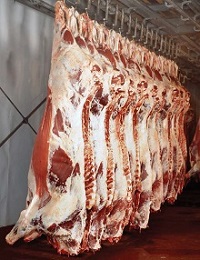
Hot-dipped galvanised chain is typically the specification of choice for overhead conveyor systems in large-stock abattoirs, where carcasses travel through wash and spray tunnels, and the chain is continuously exposed to water and cleaning chemicals. The coating thickness is considerably greater than that achieved by electroplating or sherardising, providing a longer corrosion protection window before maintenance intervention is required.
It is worth noting that hot dip galvanising can marginally affect dimensional tolerances on precision chain components, so Renold's technical team should be consulted when specifying for applications with tight clearance requirements. Pairing this chain with appropriately matched sprockets for processing lines ensures correct engagement and minimises accelerated wear.
Galvanised Steel Chain — Material and Base Specification
All of Renold NZ's zinc-coated abattoir chain options are produced from quality carbon steel substrates before coating is applied. Galvanised steel chain in the abattoir context therefore refers to the complete assembly, a carbon steel chain manufactured to conveyor or transmission pitch dimensions, then processed through one of the galvanising routes described above.
Where a higher base-metal specification is required, stainless steel chain is also available. However, for the majority of New Zealand abattoir applications, galvanised steel chain in sherardised or hot-dipped form delivers the optimal combination of corrosion performance and cost efficiency.
Abattoir Bi-Planar Chain and Abattoir 3D Chain
Abattoir conveyor lines are rarely straight. Overhead systems navigate turns, elevation changes, and complex routing through processing areas, and a standard flat-running chain is not always suited to this geometry. This is where abattoir bi-planar chain and abattoir 3D chain become essential.
Abattoir Bi-Planar Chain
This chain is engineered to flex in two planes, allowing it to negotiate both horizontal curves and the standard vertical pitch. This makes it well-suited to overhead conveyor systems that must turn corners within the processing floor layout without requiring separate drive sections or transfer points.
Abattoir 3D Chain
This chain extends capability further, designed to flex in all three planes to handle more complex routing within a single continuous chain run. In high-throughput meat processing plants where floor space is constrained, and conveyor routing must accommodate the architecture of the building, 3D chain eliminates the mechanical complexity of multiple transfer points and reduces the number of separate drive units required.
Both abattoir bi-planar chain and abattoir 3D chain from Renold can be supplied with appropriate corrosion-resistant coatings to suit washdown environments. The geometry of these chains means coating consistency is particularly important; Renold's factory coating processes are designed to maintain protection across all flexing surfaces and joints.
For a related example of how specialised conveyor chain configurations are applied in food processing environments, see our bakery conveyor chain example.
Get Technical Advice or Request a Quote
Choosing the right chain coating and configuration for a meat processing environment is not always straightforward. The right answer depends on washdown frequency and chemical type, whether the chain runs in an overhead or floor-level system, the specific processing stage it serves, line speed, and the conveyor's routing geometry.
Renold NZ's technical team has deep experience in abattoir chain specification across New Zealand processing operations. Whether you're replacing worn chain on an existing line, planning a new installation, or reviewing your corrosion control approach, we're available to assist.
Browse our industrial transmission chain products and conveyor chain range, or contact Renold NZ to request a quote or speak with our team.
Frequently Asked Questions
What is the difference between sherardised chain and hot-dipped galvanised chain?
Both processes use zinc to protect steel chain from corrosion, but they differ in method and performance. Sherardising is a thermochemical diffusion process that bonds zinc into the steel surface, producing a uniform alloy layer with excellent adhesion and good coverage of complex shapes. Hot dip galvanising involves immersing chain in molten zinc, producing a thicker coating that is better suited to the most aggressive continuous-exposure environments. For abattoir washdown applications, hot-dipped galvanised chain generally provides the longest service interval before recoating or replacement, while sherardised chain offers a better balance of precision and protection for overhead conveyor chain.
What types of chain does Renold supply specifically for abattoir use?
Renold NZ supplies a range of chain engineered for meat processing, including overhead conveyor chain for "W" and "V" shackle systems, bleed line and dressing line chain, evisceration table chain, hide puller chain, and mutton restrainer chain. These can be supplied in carbon steel, sherardised, hot-dipped galvanised, and stainless steel options. Abattoir bi-planar chain and abattoir 3D chain are available for overhead systems requiring multi-directional flex.
How do I know when abattoir chain needs replacing?
The primary indicator of chain wear is elongation. As pins and bushes wear, pitch length increases and chain no longer engages sprockets correctly, accelerating wear and increasing the risk of unexpected failure. Renold recommends regular measurement using a chain wear gauge. In abattoir environments, corrosion damage to zinc coatings is also a signal: once the protective layer is compromised and base steel is exposed, replacement or recoating should be assessed promptly to prevent hygiene risks and structural degradation. Correctly matched sprockets should also be inspected at chain change intervals, as worn sprockets will accelerate wear on new chain.
Can Renold NZ supply custom-configured abattoir chain?
Yes. Renold NZ can work with plant engineers and maintenance teams to specify chain for non-standard applications, including custom pitch, attachment configurations, and specific coating requirements for unique processing line geometries. Bi-planar and 3D chain options in particular often require a discussion of conveyor routing geometry to confirm the correct specification. Contact the Renold NZ team directly to discuss your requirements.
What NZ support does Renold offer for abattoir chain?
Renold NZ is based in Auckland and provides technical support, supply, and replacement chain to meat processing operations throughout New Zealand. Our team can assist with chain selection, coating specification, wear assessment, and replacement scheduling. For time-sensitive production situations, we maintain local stock of commonly specified abattoir chain to minimise downtime.